
Smart Cities: National and International Experiences
Date February 11, 2019
Time 8:30 a.m. to 6:30 p.m.
Location Room Jean-Paul-Tardif (1334)
Carré des affaires FSA ULaval-Banque Nationale
Pavillon La Laurentienne
1030, av. du Séminaire
Université Laval
Parking ($)
Free Event
About the
Event
Smart cities are an engine of economic and social growth. The Government of Canada pays great attention to this issue, particularly through the Smart Cities Challenge. Becoming a smart city requires international benchmarks to take advantage of established best practices and avoid foreseeable pitfalls. Smart Cities: National and International Experiences is an opportunity to share knowledge between cities in Canada, America, Europe, and Asia.
The symposium, organized by the Organizational Information Systems Department of FSA ULaval, will conclude with the unveiling of the Top 7 smart cities by the Intelligent Community Forum (ICF).
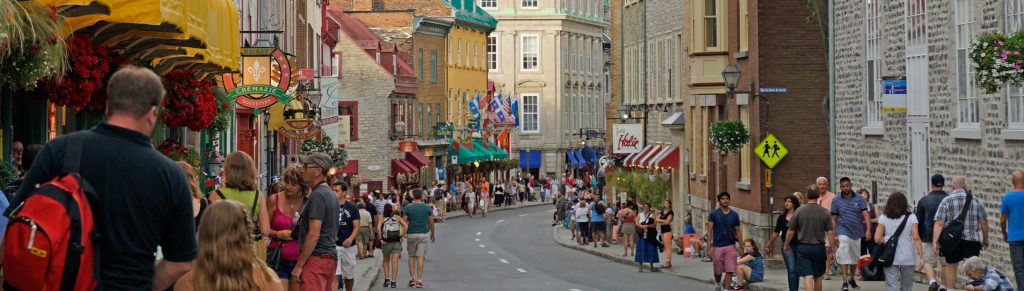
Come discover Quebec City and meet internationally renowned speakers who are experts in intelligent communities.
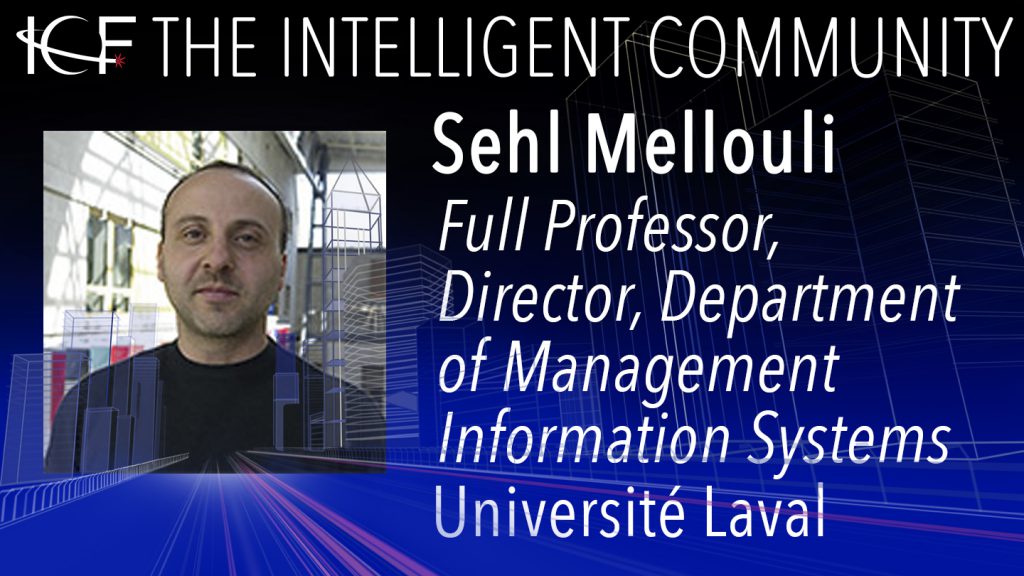
Listen to Sehl Mellouli interview (podcast)
ICF: Top7 Intelligent Communities of the Year 2019
Every year, the Intelligent Community Forum names the Top7 Intelligent Communities in the world.
This day, commemorating intelligent cities, will bring together representatives of the 7 cities selected from the most intelligent in the world, as well as world-renowned speakers and lecturers. Any cities or stakeholders interested in intelligent cities are also invited to attend this educational and networking event. International media will also be on site to cover the event.
Immediately following the live announcement at the event, ICF will release its global announcement of the Top7 Intelligent Communities of 2019 on its website.
Université Laval’s Faculty of Business Administration
The Faculty of Business Administration (FSA ULaval) holds 2 international accreditations that rank it among the top 1% of the best business schools on the planet. These accreditations are a recognition of the Faculty’s excellence in all its facets, particularly with regard to academics, research, pedagogical innovation and partnerships with the community. The Faculty is part of the extended family of Université Laval, the first French-speaking University in North America.
Intelligent Community Forum
The Intelligent Community Forum is a global network with a think tank at its centre. It connects hundreds of cities and regions on 5 continents for collaboration on economic development and for exchange of expertise and information that drives progress. Through this network, ICF researches how Intelligent Communities use information and communications technology to build inclusive prosperity, solve social problems and enrich their quality of life in our connected century.
Organizing Commitee
Sehl Mellouli, Director, Department of Management Information Systems
418 656-2131, ext. 11449
Hélène Bhérer, logistics manager
418 656-2131 ext. 409021
Olivier Duval-Montminy, logistics manager
418 656-2131 ext. 6655
Program
8:00-8:30 | Registration
8:30-9:00 | Welcome session
Speeches :
- Sehl Mellouli, Full Professor, Université Laval
- Louis Zacharilla, Co-Founder, ICF
- John G. Jung, Co-Founder, ICF
- Carl Viel, President and CEO, Quebec International
- Pierre-Luc Lachance, City Councilor (Saint-Roch–Saint-Sauveur), Deputy Mayor for Entrepreneurship, Québec City
9:00-10:15 | Emergent technologies and Intelligent Communities
Moderator: Rohit Nishant, Professor, Université Laval
Panelists:
- Christian Gagné, Associate professor, Université Laval
- Doug McCullough, CIO, City of Dublin, United States
- Theresa Pardo, Director, Center of Technology for Government
- Peter Portheine, Co-director, Binh Duong Smart City Office, Netherlands
10:15- 10:45 | Coffee Break
10:45-12:00 | Intelligent Communities experiences
Moderator: John G. Jung, Co-Founder, ICF
Panelists:
- Greg Dandewich, Vice-president, Economic Development Winnipeg Inc., Canada
- Ema Hsieh, ICF Institute, Taiwan
- Päivi Sutinen, Director for City as a Service Development, City of Espoo, Finland
- Wendy Dupley, Economic Development, City of Abbotsford
12:00-13:30 | Lunch
13:30-14:45 | Challenges of Intelligent Communities
Moderator: Louis Zacharilla, Co-Founder, ICF
Panelists:
- Pierre-Luc Lachance, City Councilor (Saint-Roch–Saint-Sauveur), Deputy Mayor for Entrepreneurship, Québec City
- Joani Gerber, CEO, investStratford, Stratford
- Mark Buckley, Application services manager, Rochester, New York
- Elizabeth Lepage, Strategist leading the City of Laval’s smart city roadmap and digital transformation
14:45-15:15 | Coffee Break
15:15-16:30 | Future of Smart Cities
Moderator: Jacqueline Corbett, Associate professor, Université Laval
Panelists :
- Thierry Badard, Professor, Université Laval
- Eric Poirier, Director Smart Cities Challenge, Infrastructure Canada
- Sebastien Tremblay, Full professor, Director, Joint Research Unit in Urban Sciences, Université Laval
- Vivianne Gravel, CEO, Metix inc. | Metix Capital inc., bciti Solutions Inc.
16:30-17:00 | Closing session
Speeches of:
- Sehl Mellouli, Full Professor, FSA ULaval
- Louis Zacharilla, Co-Founder, ICF
- Pierre-Luc Lachance, City Councilor (Saint-Roch–Saint-Sauveur), Deputy Mayor for Entrepreneurship, Québec City
- Carl Viel, President and CEO, Quebec International
17:00-17:30 | Transition to Cocktail
17:30-19:30 | Cocktail and announcement of the Top 7 of the year
Moderator: Sehl Mellouli, Full Professor, Université Laval
Top7 Announcement: John G. Jung & Louis Zacharilla, Co-Founders, ICF
Keynote Speakers and moderators
Thierry Badard
Professor
Research Center on Geomatic
Université Laval
Thierry Badard is professor in geoinformatics at the Department of geomatics sciences of Université Laval in Quebec City. He is the director of the Centre for Research in Geomatics (CRG) and is also a board member of the Big Data Research Centre (BDRC) at Université Laval. He has more than 20 years of experience and has been involved and has led national and international R&D projects of importance. Editor and reviewer for several international journals and conferences, his research interest deals with geospatial Big data, location analytics, data integration and fusion for better decision support, geospatial Business Intelligence, IoT (Internet of Things) and smart cities.

Mark Buckley
Application services manager
Rochester, New York
Mark Buckley has worked in Information Technology for all of his 36 year career, including private industry with large companies like Eastman Kodak and United Technologies Corporation. Mark changed his IT career path in 2016 to work in the public sector as an Application Services Manager for the City of Rochester, New York. One key driver in moving to the Public Sector, was the ability for Information Technology to improve service delivery for the greater good and prosperity of the City. When Mark started at the City, he organized and led the initiative to submit the 2017 Intelligent Community Forum Smart 21 application. This process provided valuable insight into the various services that were offered by the City, and the collaborative cross-functional processes and projects throughout the Organization. Mark’s ability to interview and present the great work of the City, placed Rochester, New York in the top 21 in 2017. In Mark’s quest to continue to improve City services, he continues to build relationships, and share information on Rochester’s Intelligent Community journey.

Jacqueline Corbett
Associate professor
Université Laval
Jacqueline Corbett is Associate Professor of Management Information Systems at FSA ULaval. She holds a Ph.D. (MIS), an MBA (Finance) and a B.A. (Honours, Business Administration). Prior to obtaining her Ph.D., Jacqueline Corbett worked for 15 years in the Canadian FinTech sector. Jacqueline Corbett’s current research interests concern the design and use of information systems (IS) to support sustainability. In particular, her research takes a multidisciplinary approach to investigate 5 core themes: smart cities, the smart grid, persuasive systems for sustainability, green IS adoption in organizations and clean technologies and has been funded by the FRQ-SC, SSHRC and NSERC. Jacqueline Corbett has published research in top IS and management journals, such as Information Systems Journal, JAIS, Journal of Business Ethics, and Strategic Entrepreneurship Journal, and has presented at an international IS conferences.
Greg Dandewich
Senior Vice-President
Economic Development Winnipeg Inc.
Greg Dandewich has been in the field of economic development for over twenty-eight years. He is responsible for guiding the development of economic development strategies reflective of Winnipeg’s broad and diversified economy. In addition, Greg Dandewich is responsible for liaising and brokering partnerships between senior levels of government and industry within the City of Winnipeg and Province of Manitoba. Greg Dandewich holds director positions on a variety of national and bi-national, business development boards including the Canadian/American Border Trade Alliance (CAN/AM BTA) and Intelligent Communities Forum Canada. Greg Dandewich has a Master’s Degree in City Planning from the University of Manitoba and has his Economic Development certification through the University of Waterloo.

Wendy Dupley
Executive Director,
City of Abbotsford Economic Development
Wendy Dupley is the Executive Director of the City of Abbotsford Economic Development and is a strategic, visionary and creative leader with global experience in both private and public sector environments. Talented in building strong partnerships and working collaboratively with a wide range of domestic and international stakeholders, Wendy Dupley’s specialty areas include identifying key domestic and international economic indicators, as well as workforce strategies to support business development. Wendy Dupley has completed business development assignments in Europe, the UK, the USA, Australia, Asia, South America and Central America. Wendy Dupley holds an impeccable track record of a more consensus-building approach to achieving business goals.

Christian Gagné
Associate professor
Electrical Engineering and Computer Engineering Department
Université Laval
Christian Gagné is professor at the Electrical Engineering and Computer Engineering Department of Université Laval since 2008. He is member of the Computer Vision and Systems Laboratory, the REPARTI FRQNT Strategic Cluster, and deputy director of the Big Data Research Centre. He completed a Ph.D. in Electrical Engineering (Université Laval) in 2005 before being postdoctoral fellow at the INRIA Saclay – Île-de-France (France) and the University of Lausanne (Switzerland) in 2005-2006. He was research associate for Informatique WGZ Inc. (2006-2007) and MacDonald, Dettwiler, and Associates Ltd. (2007-2008). He is member of the Ordre des ingénieurs du Québec, the IEEE, and the ACM. His research interests are on the engineering of intelligent systems, especially systems based on machine learning, evolutionary computing, and their application to pattern recognition, smart sensors, smart grids, and simulation of public health processes.

Joani Gerber
CEO
investStratford, Stratford
Joani Gerber is CEO of investStratford where she supports Stratford’s varied business economies encouraging growth, expansions, attractions and new partnerships. Current active projects include the Autonomous Vehicle Innovation Network, Connected Car collaborations, ongoing company retention & expansions, new investment attraction and Smart Community Initiatives. As a Stratford native, she is deeply committed to pursuing excellence while maintaining both a global vision and a local perspective. Previous experience includes roles with both the Waterloo and Stratford Accelerator Centres, (where, in the position of VP, Client Experience and Partner Relations she was responsible for the incubation programming and the partnerships with post-secondary institutions and all levels of Government), Perth Community Futures Development Corporation and the Stratford Perth Centre for Business. She holds a degree from Wilfrid Laurier University and is past Board Chair for the Stratford/District Chamber of Commerce.

Vivianne Gravel
Founder and President
Metix inc. | Metix Capital inc.
bciti Solutions Inc.
Vivianne Gravel is widely recognized as a pioneer and activator of mobile, digital and AI innovations that inspire positive impacts while improving organizational performance and people’s lives.
After years of experience in C-level positions with international scope, she co-founded and successfully sold LIPSO, the first integrated mobile platform company in Quebec. She later launched and propelled METIX, Chronometriq, METO, METIX Capital and, more recently, BCITI Solutions, an integrated intelligent platform that leverages Artificial Intelligence to efficiently connect cities to their residents while simultaneously connecting cities to each other. Known for creating win-win partnerships and long-term relationships, she is a sought-after keynote speaker on Artificial Intelligence and IT innovation.
Li Wen (Ema) Hsieh
ICF Institute
Taiwan
Beginning in 1989, Li Wen (Ema) Hsieh worked for the Industrial Technology Research Institute (ITRI); one of Taiwan’s most important research organizations. She held several significant positions during her career here, including Head of PR, Project Manager in Latin America, and the New Business Director of the Technology Center for Service Industries.
After her retirement from ITRI in 2013, she was invited to be an advisor to the Joint Innovation Center of the Taiwan Electrical and Electronic Industry Association to assist the Taiwanese industry with expanding its sales to Latin America. In 2018, she joined the ICF Institute in Taiwan and is responsible for business development and marketing. She also has an extensive network with the smart city solution providers in Taiwan. Li Wen (Ema) Hsieh holds a Master’s degree in Business Administration from Chung Hua University, Taiwan.
John G. Jung
Executive Director, ICF Canada (Toronto)
Chairman and Co-Founder, Intelligent Community Forum (NYC, USA)
President, ICF Foundation (USA)
Chairman and Co-Founder of the Intelligent Community Forum (ICF), John is a professional, award-winning urban planner, urban designer, economic developer, author, visiting professor and global speaker on planning, development, urban design and economic development related issues, especially related to Smart Cities and Intelligent Communities.
He is the former President and CEO of several of Canada’s largest economic development organizations, including Calgary Economic Development Authority, Greater Toronto Marketing Alliance and Canada’s Technology Triangle in Waterloo. John is also a former urban planner, urban designer and developer in many cities, including Toronto, and advisor on urban development and economic development to global leaders around the world for over the past three decades.
In addition to initiating and chairing the global non-profit think tank, the Intelligent Community Forum in NYC, which he Co-founded with two US-based partners, John also founded the Canadian national non-profit, ICF Canada and acts as its inaugural Executive Director. John regularly speaks globally at conferences, symposiums, corporate gatherings as well as to city councils and universities in Canada and around the world. He has also been a keynote speaker at significant gatherings and events including Ted Talks, at APEC and at the Global Forum.
He has created several collaborative networks, nationally and internationally, including the Ontario Tech Corridor and contributed to the formation of the national economic development collaborative, CCCA and other collaborative innovation ecosystems in several cities around the world. He has been involved with global boards, such as the World Teleport Board, World Trade Center Association, Toronto Harbour Commission, University of Waterloo Accelerator Centre and the Canadian Urban Institute. He also acts as an advisor of several city-building related organizations, innovation startups and incubators. Recently he helped to form ICF Taiwan and the ICF Institute in Taiwan.
John has extensively written on topics related to planning, economic development and international smart cities for Canadian and global publications, including as a regular columnist for publications in India, The Netherlands, Canada and the USA. He is also an author and co-author of reports, books and articles widely read on these topics. He has also extensive exposure in national and international television broadcasts, radio and in international journals and newspapers.
John’s extensive global exposure leading hundreds of international delegations, writing and delivering keynote addresses, and evaluating cities globally on behalf of ICF have helped to raise awareness of the Smart City and Intelligent Community movement and helped communities around the world to become better, more livable cities for their citizens.

Pierre-Luc Lachance
City Councilor (Saint-Roch–Saint-Sauveur)
Deputy Mayor for Entrepreneurship
Québec City
Pierre-Luc Lachance holds an advanced graduate diploma (DESS) in organizational management and a multidisciplinary bachelor’s degree from Université Laval. Pierre-Luc Lachance is passionate about boosting Québec City’s profile and has worked in event planning for nearly 15 years. He served as general manager and content creator for Québec Numérique from 2014 to 2017.
He has many accomplishments to his name, including as a project manager for 3E Événements, a member of Université Laval’s board of directors, and executive director of the Québec City Celtic Festival. He was elected as a municipal councillor in November 2017 and is the deputy mayor for the Entrepreneurship component.

Elizabeth Lepage
Strategist leading the City of Laval’s smart city roadmap and digital transformation
Elizabeth Lepage is the Strategist leading the City of Laval’s smart city roadmap and digital transformation. The city of Laval is the third largest city of the province of Quebec, and the largest suburb of Montreal. With its rapid growth, Laval is reinventing itself as a city, valuing both the urban and natural environments enjoyed by its citizens.
Elizabeth Lepage has over 20 years of experience in information technology, innovation project development, technology commercialization and large-scale digital transformation. Her career path includes several accomplishments as an entrepreneur-founder of a healthcare software start-up. She has held leadership management positions for large ITC companies such as Bell Canada and AT&T. Prior to joining the city of Laval, she led CGI’s consulting practice for the municipal, healthcare and education segments where she led the governance of major transformation projects in the public domain.
Throughout her career Elizabeth has embraced new perspectives, strived outside of comfort zones, built diverse networks and valued humility. Today she acts with the firm belief that in this time of exponential technological advancements, government matters more than ever.
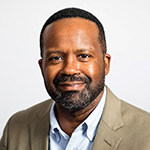
Doug McCollough
CIO of the City of Dublin
Ohio, USA
As CIO of the City of Dublin, Ohio, Doug McCollough has embraced the rich community of innovation that is Central Ohio. Through collaborations and partnerships he has worked to connect people to opportunities, remove barriers, and promote change in initiatives ranging from Smart and Connected Cities, IT Workforce Development, expanding broadband access, and Connected and Autonomous Vehicles. He has spoken as a Subject Matter Expert and advocate on technical subjects, diversity and inclusion, career advancement, and using technology for community development. Prior to joining the Dublin team, Doug held positions within the State of Ohio Departments of Public Safety, Commerce, Industrial Commission, and Medicaid. He served as the Director of Information Technology for the City of Richmond, Virginia, and as a Project Manager at Nationwide Insurance and Alcatel-Lucent. Doug earned a bachelor’s degree from the University of Toledo in Information Systems and Operations Management and a Master of Business Administration degree from the University of Notre Dame. Smart Mobility, IoT, Blockchain, Artificial Intelligence, Automation, Bots, and the social implications these technologies bring with them, are all interests you’ll find Doug tweeting about (@dougITpro).
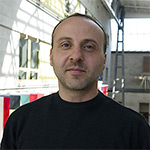
Sehl Mellouli
Full Professor
Director Department of Management Information Systems
Director Centre de recherche sur les communautés intelligentes (CeRCI)
Université Laval
Sehl Mellouli is a professor at the department of Information Systems at Université Laval, Quebec City, Canada since June 2005. He obtained his Phd in Computer Science from Université Laval in 2005. He has an MBA in Management Information Systems from Université Laval. He is also an engineer in computer science from the Ecole Nationale des Sciences Informatiques, Tunis, Tunisia.

Rohit Nishant
Professor
Université Laval
Rohit Nishant is a Professor at FSA ULaval. He holds a Ph.D. from the National University of Singapore. His research interests include green IS/IT, sustainability, business and social values of information technologies and e-government. His research has been published or accepted for publication in several top-tier journals such as MIS Quarterly, Journal of the Association for Information Systems, The Journal of Strategic Information systems, IEEE Transactions on Engineering Management, and MIS Quarterly Executive, among others. He has also won multiple awards, including Society for Information Management (SIM) paper competition winner and World Future Foundation Annual Ph.D. prize in environmental and sustainability research.

Theresa Pardo
Director
Center of Technology for Government
Theresa A. Pardo, Ph.D., serves as Director of the research institute CTG UAlbany. She is also a full research professor in Public Administration and Policy at Rockefeller College of Public Affairs and Policy. Under her leadership, CTG UAlbany works closely with multi-sector and multidisciplinary teams from the U.S. and around the world to carry out applied research and problem solving projects focused on the intersections of policy, management, and technology in the governmental context. The institute has broken ground in information and knowledge sharing, smart cities, open government and open data, e-government, social media policy, and mobile technologies and human service delivery.
In 2018 Theresa Pardo was named as one of the Top 100 Influencers in Digital Government globally. She is also a recipient of Government Technology Magazine’s Top 25 Doers, Drivers, and Dreamers Award which recognizes individuals throughout the U.S. who exemplify transformative use of technology that’s improving the way government does business and serves its citizens. Theresa Pardo is a recipient of the University at Albany’s Distinguished Alumni Award, the University at Albany’s Excellence in Teaching Award, and the Rockefeller College Distinguished Service Award.
Theresa Pardo holds a Ph.D. in Information Science from the University at Albany, SUNY.
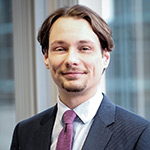
Eric Poirier
Director
Smart Cities Challenge, Infrastructure Canada
Eric Poirier is a Director working on Canada’s Smart Cities Challenge. He brings over 15 years of experience in the Public Service of Canada to the implementation of this innovative program. Leading a dynamic team, Eric has been instrumental in the creation and launch of the Challenge.
Prior to taking on this position, Eric has focused much of his career on Indigenous issues, including land claims and self-government negotiations. He also has a keen interest in the fields of science and technology, exploring their potential for improving the quality of life of citizens.

Peter Portheine
Co-director, Binh Duong Smart City Office
Netherlands
Peter Portheine is the co-founder of Eindhoven International Project Office (EIPO). He is also an entrepreneur and the Program Director of Brainport Smart Cities. In Vietnam, he is a High Tech Business Adviser and a High Level Advisory Socio-Economic development. He is a member of the ASEAN Liberal Member Regional Government Province of North Brabant. His specialties include Smart Cities, Smart Health, ICT, Innovation and Business Incubation.
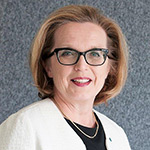
Päivi Sutinen
Director for City as a Service Development
City of Espoo, Finland
PhD, EMBA, is now Director for City as a Service Development, at the City of Espoo which was just awarded for The Intelligent Community of the Year 2018 in the world. She has worked over 25 years as a director or developer at the two biggest cities in Finland: Espoo and Helsinki. She has worked at City of Espoo also as a Corporate Services Director, Director for Occupational Health Services and at Helsinki as a Development manager and Section Director. Recently she has been leading the development of the business models for the New Open Cities as a Service for new innovations. She is chairman of the 6Aika-Strategy for Open and Smart Services – The Six City’s strategy’s stearing group. 6Aika is the joint strategy for tackling their common urban challenges with six largest cities (Helsinki, Espoo, Vantaa, Oulu, Tampere and Turku) in Finland. The 6Aika is Finland’s flagship in the EU Cohesion Policy’s 30th anniversary year 2018. Her dissertation was “The Essence of Developing as a Director: Experiences of Directors in the Municipal Sector”. Her EMBA-Thesis was “New Open City-The Root causes, change drivers and new tools for the Future Challenges in the Cities leadership, management and development”.

Sébastien Tremblay
Full professor
Director, Joint Research Unit in Urban Sciences
Université Laval
Sébastien Tremblay received his Ph.D. in Psychology from Cardiff University (1999) and completed a postdoctoral fellowship from a partnership between Cardiff and the Defence Evaluation and Research Agency (DERA ; now QinetiQ). He is a Professor at Laval University, the founding member of the Co-DOT lab (www.co-dot.ulaval.ca), an Honorary Professor at Cardiff University, UK, and the Director of the Joint Research Unit in Urban Sciences (www.umr-su.com) – a consortium of academic, industrial and government partners teaming up in a joint R&D initiative to create innovative and smart solutions to emerging city challenges. His research program is centered on human interactions with technologies, and the main goal is to maximize human performance and quality of life in a wide range of domains such as security, transportation, emergency medicine, education and entertainment. From a cognitive science perspective, he has contributed to the development of intelligent systems in those domains.
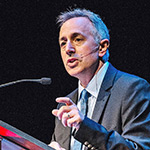
Louis Zacharilla
Co-founder
ICF
Louis Zacharilla is a social entrepreneur credited with initiating the global Intelligent Community movement. As a founder of the Intelligent Community Forum he developed the Forum’s iconic Awards program and has founded two institutes for the study of the Intelligent Community. Lou speaks to audiences and community leaders worldwide to help them understand the ICF Method that helps shape the advancement of communities with a focus on the role of innovation, creativity and culture as key drivers. He appears regularly in the media and is a frequent keynote speaker and moderator at events on subjects related to smart cities. He is quoted in influential forums, including the annual Wealth Report and Government Technology magazine. He joined former British Prime Minister Gordon Brown at the Nobel Peace Prize event in Oslo to speak about ways to create more free and open societies. In June 2016 he gave his first TEDx talk in Brazil.
Registration & Fees
Conference registration and fees (CAD$)
All fees are in Canadian dollars – $CAD
Registration is now close
Registration fees for the conference day
- Regular registration fee: $225
- Student registration fee: $50
Including:
- breakfast, coffee breaks and lunch and the 7 cities selected from the most intelligent in the world
- cocktail (regular registration only – the student registration does not include the Cocktail)
- Université Laval greenhouse gas emissions offset program fees
Cancellation and refund policy
- Full reimbursement will be possible for cancellations before or on January 1st, 2019. A cancellation fee of 50% of the registration fee will be charged for cancellations between January 1st and 31, 2019. There will be no reimbursement for cancellations after January 31, 2019.
- All cancellations must be made in writing via email to evenements@fsa.ulaval.ca. Delegates who neither cancel nor attend will be charged the full registration fee.
Practical Information
Getting to Québec City
By plane
Please note: Université Laval is located in Québec City, not in the City of Laval (which is near Montréal).
People flying to the Conference must make sure that their final destination is Québec City Jean Lesage International Airport (YQB). For all flight options to and from Québec City, please refer to the list of destinations served by the Québec City-Jean-Lesage International Airport or the Air Accessibility Chart.
Jean-Lesage International Airport is located 16 km (10 miles) from downtown Québec City.
By car
Highway 20 (Autouroute Jean-Lesage) runs along the south shore of the St. Lawrence River, and Highway 40 (Autoroute Félix-Leclerc) is the north shore access to the city.
By motor coach
Fédération des transporteurs par autobus – Intercity Transit
Accessible to all, the intercity transportation network consists of 222 intercity bus stations throughout Québec for efficient, timely travel.
Website
Intercar
Intercar links Québec City with Saguenay, Lac-Saint-Jean, Charlevoix, and all destinations along the North Shore (Côte-Nord).
Website
Orléans Express
Orléans Express Coach Lines provide daily service between Québec City, Montréal, and other destinations in the province.
Website
Greyhound
Visitors travelling by motor coach from the USA come into Montréal via Greyhound, then transfer to an Orléans Express motor coach to Québec City.
Website
Québec City intercity bus stations
Gare du Palais Bus Terminal
320, rue Abraham-Martin, Québec
418-525-3000
Sainte-Foy Terminal
3001, chemin des Quatre-Bourgeois, borough of Sainte-Foy–Sillery–Cap-Rouge
418-650-0087
By train
Visitors traveling by train from the USA come into Montréal via Amtrak, then transfer to VIA Rail Canada trains to Québec City.
VIA Rail Canada Daily VIA Rail Canada service between Toronto, Ottawa, Montréal and Québec City.
1-888-842-7245 | Website
Amtrak
1-800-USA-RAIL (1-800-872-7245) | Website
Québec City train stations
Gare du Palais (central station)
450, rue de la Gare-du-Palais, Québec
1-888-842-7245
Gare de Sainte-Foy
3255, chemin de la Gare, borough of Sainte-Foy–Sillery–Cap-Rouge
1-888-842-7245
Airport Transfers and Taxi Services
Québec City Jean Lesage International Airport (YQB) is just 20 minutes away from downtown Québec City. At the airport, taxi services are within easy reach to access downtown. Fixed rates: CAD$34.25. Cash or credit cards are accepted.
If you wish to share a taxi with other delegates on your way back to the airport, sharing request forms will be available at the information desk during the conference.
If you need a taxi, you can call any of the following numbers:
Taxi Coop Québec: 418-525-5191
Taxi Coop Sainte-Foy–Sillery: 418-653-7777
Taxi Laurier: 418-651-2727
Getting to Conference
Conference activities will be held on February 11th at Pavillon La Laurentienne (Carré des affaires FSA-ULaval Banque Nationale), 1030, Avenue du séminaire, Université Laval.
The University is located about 6 km from downtown Québec city and is easily accessible by public transport. Because of the distance, we do not recommend walking to the University, unless you are staying at a hotel in the vicinity of the University in Sainte-Foy
Public transit
You can easily travel around Québec City using the Réseau de transport de la Capitale (RTC – Québec City’s public transit authorities). Bus fare is CAD$3.50 (cash only). You can also obtain a reloadable and reusable OPUS bus card without picture for CAD$6.00.
From Hôtel Château Laurier to the University
Below are the bus schedules and detailed itineraries (30 minutes) from Hôtel Château Laurier.
- Take Metrobus 800 or 801 heading to Pointe-de-Sainte-Foy using the Colline parlementaire stop (#1517) on René-Lévesque Est/Jean-Jacques-Bertrand, in front of the Québec City Convention Centre. Metrobus stops are marked with the icon on the Québec City map. Metrobuses 800 and 801 run every 5 to 10 minutes.
- Get off at the Station Université Laval stop (#20580) at the intersection of rue de l’Université and avenue des Sciences Humaines.
- Head northeast on rue de l’Université and turn left onto avenue du Séminaire.
- Walk up avenue du Séminaire until Pavillon La Laurentienne.

Our University

Université Laval
- Founded in 1663, Université Laval is the oldest French-speaking university in North America and is the 6th most important in Canada
- 1.8 km square campus including 40 buildings connected by footpaths and more than 5 km of underground tunnels and green space
- An impressive library housing 6 million documents and thousands of electronic resources available online
- Near 500 regular, custom, continuing, and distance education programs
- 43,000 students, of whom 25% are Graduate students
- Vibrant and diverse community, with near 4,600 international students
- More than 1,600 fulltime Faculty members and 2,100 lecturers and other teaching and research staff
- 275 research centres, chairs, institutes and other groups
- $377M in research funds (ranking Université Laval sixth out of the top 50 research universities in Canada)
- Some 700 partnership agreements with some 500 universities in nearly 70 countries
- Over 230 student associations
- Nearly 270,000 graduates since the university’s founding
Faculty of Business Administration (FSA ULaval)
Since 1924, FSA ULaval has been training students to become competent and responsible managers and business specialists. Today, FSA ULaval is part of a select group of 80 Business Schools, out of more than 12,000 worldwide, to have obtained both the AACSB and EQUIS accreditations.
- More than 5,000 students, including more than 800 international students
- 135 professors and full-time lecturers ready to engage with students and whose research expertise is internationally renowned
- A dynamic network of more than 40,000 alumni in Canada and abroad
- Close connections with large international corporations and local SMEs
- State-of-the-art technological infrastructure
- A Canadian leader in hybrid and online-based education
- Partnerships with more than 100 world-renowned universities and management schools
- 23 world-class research chairs, centres and laboratories
- Outstanding student-athletes with our competitive Rouge et Or sports teams
- A vibrant student life with more than 20 student organizations
Entry requirement in Canada
New entry requirements are now in effect in Canada. All foreigners other than U.S. citizens are now expected to have either an Electronic Travel Authorization (eTA) or a visitor visa to enter Canada.
Be prepared:
2. If you need an eTA (EU citizens, for example): Apply for an eTA before you book your flight to Canada. Most applicants get approved within minutes. However, some applications can take several days to process, so don’t wait until the last minute.
- If you need a visitor visa, note that a visa application may take several weeks or months to process. We recommend that you file your visa application as soon as possible, online, through Immigration, Refugees and Citizenship Canada’s website. You will be required to enclose an invitation letter from the organizers of the 2019 AFFI Conference with your application. To obtain this letter, you must without delay:
- register with the Conference and pay all Conference participation fees
- send an email request to evenements@fsa.ulaval.ca
Accommodation
NB: In all cases, accommodation fees are not included in the registration fee.
Hôtel Château Laurier
Located on trendy Grande Allée, 5 km east of Université Laval, Hôtel Château Laurier is right in the heart of Old Québec, a few minutes’ walk from many restaurants and tourist attractions, and a stone’s throw from the Plains of Abraham.
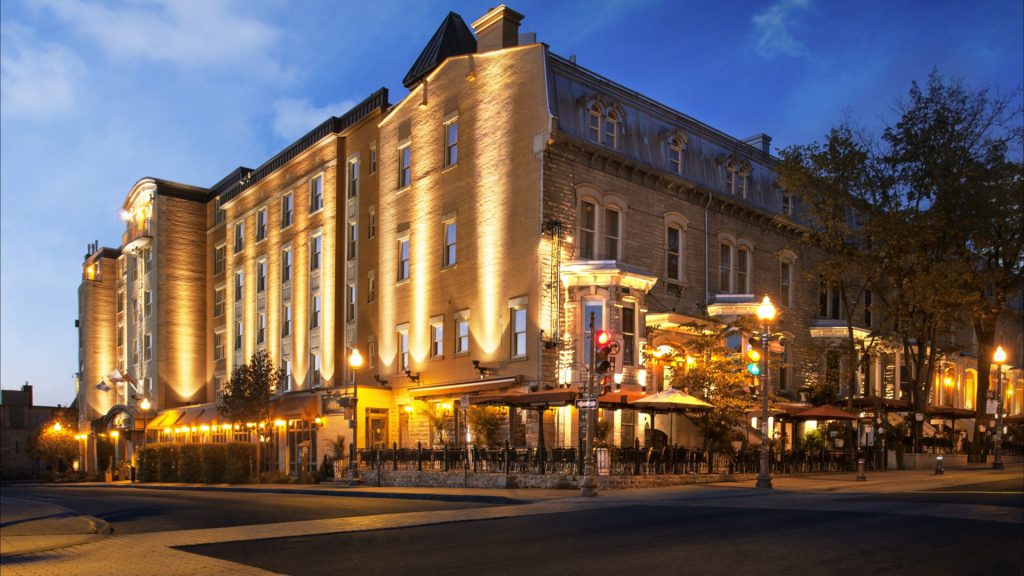
Hôtel Château Laurier
1220, Place George-V Ouest
Québec (Québec) G1R 5B8
Website
1 800 463-4453 or reservation@vieuxquebec.com
Hotel Alt Québec
Located 2 kilometers from Université Laval, Sainte-Foy sector, the Hotel Alt Quebec is at the center of a hybrid business and pleasure district, just a stone’s throw from Laurier Boulevard. Many shops and restaurants are nearby.
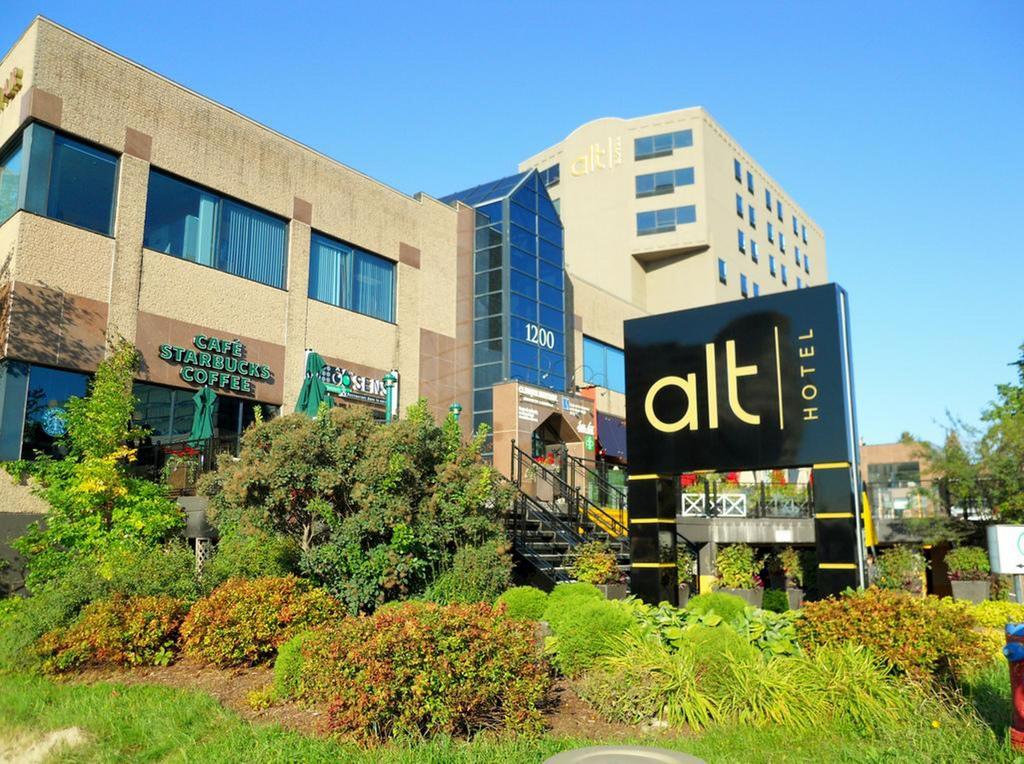
Hôtel Alt Québec
1200, avenue de Germain-des-Prés
Québec (Québec) G1V 3M7
Site Web
1 800 463-5253 ou reservations.quebec@althotels.ca
Other hotels
There are many other accommodations in Québec City. In choosing your accommodation, however, remember to consider proximity to public transit services to commute to Université Laval (Metrobus 800 or 801).
Hotels near the Old City / Downtown
The area near the Old City offers many options in terms of accommodations. Here are a few possibilities:
- Fairmont Le Chateau Frontenac Hotel
- Hôtel le Concorde
- Hilton Québec
- Quebec City Courtyard Marriott Downtown
- Auberge Saint-Antoine
- Hôtel Manoir Victoria
- Auberge Saint-Pierre
- Hôtel 71
- Auberge Place d’Armes
Hotels near the conference site (Université Laval)
Other hotels are located closer to the conference site (Université Laval), usually at a lower cost, although the setting is less spectacular than the Old City. From the university, metrobus 800 or 801 is an easy way to get to the Old City area, where the evening social events will take place. Here are some options:
Please note that no preferential rates have been negotiated with these hotels.
Université Laval student residences
Located on the Université Laval campus, the students residences offer a convenient and affordable alternative for participants.
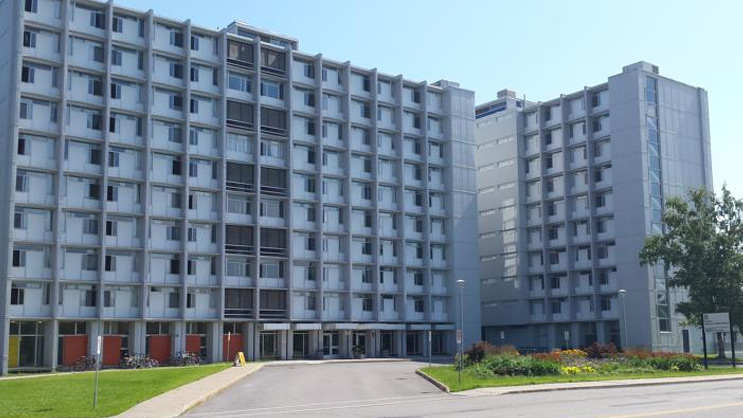
Résidences étudiantes de l’Université Laval
2255, rue de l’Université
Québec (Québec) G1V 0A7
Site Web
418-656-5632 or hebergement@sres.ulaval.ca
Walking route to student residences

Weather
Quebec has 4 distinct seasons. The weather can sometimes be surprising. Better to be sure about the clothes you will bring. Discover the maximum and minimum temperatures per month.
Check the local weather before packing.
Partners
HOST

COLLABORATOR

PLATINUM PARTNERSHIP

SILVER PARTNERSHIP

COPPER PARTNERSHIP

PROMOTIONAL PARTNERSHIP

Contact Us
Think sustainable development
In our commitment to sustainable development, we recommend that you use public transit or car-pooling. Voluntary compensation for greenhouse gas emissions can also be paid.