Midi de la recherche SIO avec Sirkka Jarvenpaa
Date 17 février 2023
Heure 12h30 à 14h
Lieu Sur place (Salle Fondation Famille Choquette [2327]) ou en ligne
Événement gratuit
À propos de
l'événement
Le Département de systèmes d’information organisationnels vous invite à une présentation de la professeure Sirkka Jarvenpaa, de l’Université du Texas à Austin, qui portera sur son article Towards a Theory of Collective Learning-by-Forking: How and When Software-Based Self-Organization Enables Collective Learning.
La présentation se déroulera en anglais.
Une boîte à lunch sera offerte gratuitement aux personnes présentes.
Conférencière
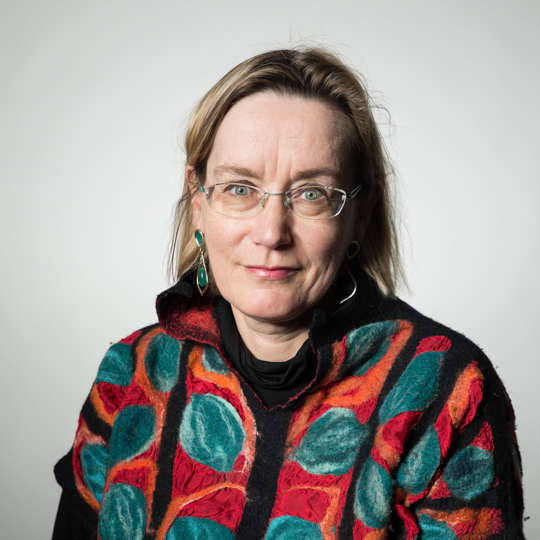
Sirkka Jarvenpaa
Professeure
Université du Texas à Austin
Résumé
Digital platforms, networks, ecosystems, and infrastructures are decentralized organizational systems with autonomous actors with no formal contracts nor managerial authority. The decentralized digitally enabled organizational systems depend on autonomous participants to self-organize. In open software environments, self-organization involves soft and hard forking processes. Prior studies have examined how such self-organized forking emerges and how forking adaptively coevolve the organizational systems. Yet, without collective learning, self-organization renders decentralized organizational systems vulnerable to authoritative overtaking or fragmentation.
Decentralized organizational systems depart from traditional organizations in terms of organizational learning in that there is no “socialization to code.” Socialization to code is fundamental to classic organizational learning theories; without socialization to code, learning is myopic. We analyze how forking can engender self-organized experiential, vicarious, and shadow learning and how this learning at the micro level can be myopic but can nevertheless advance collective learning at a high level.
We theorize how and when temporal structuring mechanisms has the capacity both to maintain a shared temporal space but also to de-structure time so that individual commitments can be attended to, pursued, and potentially later joined, with the collective efforts. The analysis builds toward a theory of collective learning-by-forking.