Séminaire du Fonds Conrad-Leblanc
Date 12 avril 2019
Heure 8h45 à 13h
Lieu Salle Jean-Paul-Tardif (1334)
Carré des affaires FSA ULaval–Banque Nationale
Pavillon La Laurentienne
1030, av. du Séminaire
Université Laval
Québec (Québec) G1V 0A6
Stationnement ($)
Événement gratuit
À propos de
l'événement
Dans le cadre des activités du Fonds Conrad-Leblanc, nous vous convions à un séminaire qui met en vedette 2 conférenciers de grande notoriété. Le séminaire sera présenté en anglais.
Ne manquez pas cet événement de prestige!
Déroulement
8h45 | Accueil – Café et viennoiseries
Foyer de la salle Jean-Paul-Tardif
9h15 | Début des conférences
Salle Jean-Paul-Tardif (1334)
12h30 | Dîner (gratuit)
Restaurant Le Quatre-Vingt-Dix
Conférenciers
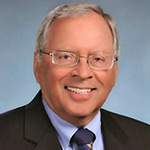
Robert A. Eisenbeis, Ph.D. Wisconsin
Vice Chairman & Chief Monetary Economist Cumberland Advisors, USAFormer Executive Vice-President and Director of Research, Federal Reserve Bank of Atlanta
Alternative Ways to Increase Bank Capital as a Way of Ensuring US Financial Stability: Should CoCos Be Part of the Solution?
As part of regulators’ post-crisis capital enhancement efforts, numerous proposals have been made to allow alternative forms of debt and quasi debt instruments to count towards primary capital (Tier I) and secondary capital (Tier II) requirements. Most prominent among these have been proposals for encouraging SIFIs to issue so-called contingent capital securities (CoCos). This review shows that the regulatory approach to incorporating CoCos into capital requirements, much of which predated the more recent work on how CoCos should be structured, doesn’t meet the standards in term of design that would enable them to function effectively. Most of the CoCos that have been issued are of the “write-down” form based upon backward looking accounting measures with triggers geared to risk-based capital standards rather than “going-concern” CoCos with market based triggers that would encourage owners and managers from taking on increased leverage and less risk. Given these deficiencies and lessons from the European experience to date with CoCos, US regulators should continue to approach CoCos with skepticism and caution. The alternative is to consider a modified version of the regulatory “off-ramp” proposal contained in the Financial Choice Act that holds the potential to increase bank capital while providing significant regulatory relief.
Robert A. Eisenbeis serves as Cumberland Advisors’ Vice Chairman and Chief Monetary Economist. In this capacity, he advises Cumberland’s asset managers on developments in US financial markets, the domestic economy and their implications for investment and trading strategies. Cumberland Advisors manages approximately $3 billion of fixed income as well as equity accounts. https://www.bloomberg.com/news/videos/2017-12-14/cumberland-s-eisenbeis-on-fed-jobless-rate-forecast-video
Dr. Eisenbeis was formerly Executive Vice-President and Director of Research at the Federal Reserve Bank of Atlanta, where he advised the bank’s president on monetary policy for FOMC deliberations and was in charge of basic research and policy analysis. Prior to that, he was the Wachovia Professor of Banking at the Kenan-Flagler School of Business at the University of North Carolina at Chapel Hill. He has also held senior positions at the Federal Reserve Board and FDIC.
He is currently a member of the Shadow Financial Regulatory Committee and Financial Economist Roundtable and a fellow member of both the National Association of Business Economics and Wharton Financial Institutions Center. He holds a Ph.D. and M.S. degree from the University of Wisconsin and a B.S. degree from Brown University.

Kenneth Kuttner, Ph.D. Harvard
Robert F. White Class of 1952 Professor of Economics, Williams College, USAFormer Assistant Vice President, Research Departments, Federal Reserve Banks of New York and Chicago.
Outside the Box: Unconventional Monetary Policy in the Great Recession and Beyond
In November 2008, the U.S. Federal Reserve was facing a deteriorating economy and the fallout from the financial crisis. Having already cut the interest rate to zero, the Fed turned to two novel (and somewhat controversial) policies in an effort to stimulate the economy. One was the purchase of vast amounts of government and private-sector debt. The second was to explicitly communicate the likely path of interest rates. In this lecture, Professor Kuttner takes stock of what we know (and don’t know) about the policies’ effects: Did they work as intended? Did they have adverse side effects? And, should they be used again?
Ken Kuttner is the Robert F. White Class of 1952 Professor of Economics at Williams College and a Research Associate of the National Bureau of Economic Research. His research has addressed such issues as the roles of monetary aggregates and interest rates in monetary policy, inflation targeting, methods for estimating potential output, the Japanese economy, and the impact of monetary policy on financial markets.
“What Explains the Stock Market’s Reaction to Federal Reserve Policy?” (Ben S. Bernanke and Kenneth Kuttner), Journal of Finance, June 2005. “Ben S. Bernanke served two terms as Chair of the Federal Reserve, the central bank of the United States, from 2006 to 2014. During his tenure as chair, Bernanke oversaw the Federal Reserve’s response to the late-2000s financial crisis.”
Prior to joining the Williams faculty, Mr. Kuttner was the Danforth-Lewis Professor of Economics at Oberlin College. He has held nonacademic positions as Assistant Vice President in the Research Departments of the Federal Reserve Banks of New York and Chicago. He earned his Ph.D. from Harvard University and an A.B. degree from the University of California at Berkeley.
Partenaires
Ce séminaire est organisé en partenariat avec le Département de finance, assurance et immobilier, la Chaire RBC en innovations financières, la Chaire d’assurance et de services financiers L’Industrielle-Alliance, la Chaire Groupe Investors en planification financière, les Salles des marchés Carmand-Normand et Jean-Turmel et le LABIFUL.
Informations utiles
Van Son Lai
418 656-2131, poste 403943
Pour en savoir plus sur le Fonds Conrad-Leblanc