
Séminaire du Fonds Conrad-Leblanc
Date 13 avril 2018
Heure 8h45 à 12h30
Lieu Salle Power Corporation du Canada (3452)
Carré des affaires FSA ULaval-Banque Nationale
Pavillon La Laurentienne
1030, av. du Séminaire
Université Laval
Stationnement payant (détails)
Événement gratuit
À propos de
l'événement
Dans le cadre des activités du Fonds Conrad-Leblanc, vous êtes conviés à une demi-journée conférence mettant en vedette deux conférenciers de notoriété internationale. Ne manquez pas cet événement de prestige!
Les conférences seront présentées en anglais.
Déroulement
8h45 | Accueil – Café et viennoiseries
Passerelle Jules-Dallaire
9h15 | Début des conférences
Salle Power Corporation du Canada (3452)
12h30 | Dîner (gratuit)
Lieu à venir.
Conférenciers
Edward W. (Jed) Frees
Ph.D. (North Carolina), FSA, Fellow of the ASA

Edward W. (Jed) Frees, Ph.D. (North Carolina), FSA, Fellow of the ASA
Hickman/Larson Chair of Actuarial ScienceWisconsin School of Business, USA
Predictive Analytics and Medical Errors
Résumé (abstract)
Insurance as a discipline has long embraced analytics and market trends signal an even stronger relationship going forward. This presentation describes contributions of analytics and statistical methods that further our understanding of insurance operations and markets. Professor Frees will provide an introduction and a summary of selected resources for learning more about insurance analytics.
To be specific, this talk illustrates the use of predictive analytics in the context of medical errors. Analyzing medical errors helps improve healthcare systems and, through a type of insurance known as « medical professional liability » or « medical malpractice, » we have the ability to analyze medical errors using data from outside the healthcare system. In the spirit of modern analytics, Professor Frees describes the application of data from several different sources. These different sources give different insights into a specific problem facing the medical malpractice community familiar to actuaries, the relative importance of upper limits (or caps) on insurance payouts for non-economic damages (e.g., pain and suffering). This topic is important to the industry in that many courts are considering the legality of such limitations. All stakeholders, including patients, physicians, hospitals, lawyers, and the general public, are interested in the implications of removing limitations on caps. This talk demonstrates how we can use data and analytics to inform the many different stakeholders on this issue.
Edward W. (Jed) Frees is a Professor of Business at the University of Wisconsin-Madison and is holder of the Hickman Larson Chair of Actuarial Science. He is a Fellow of both the Society of Actuaries (SoA) and the American Statistical Association (ASA).
There are about twenty thousand members of the SoA and twenty-five thousand members of the ASA: of these, Professor Frees is the only Fellow of both organizations. Professor Frees received his Ph.D. in mathematical statistics in 1983 from the University of North Carolina at Chapel Hill.
Prior to being at Chapel Hill, he was employed by M & R Services (a Seattle actuarial and software consulting firm), John Eriksen’s & Partners (a New Zealand actuarial consulting firm), and the United Kingdom’s Government Actuaries Department. In addition, in 1989-1990 he was a Visiting Principal Researcher at the U. S. Bureau of the Census. His home has been UW-Madison since 1983 where he teaches courses in statistics and actuarial science.
In addition to his classroom teaching activities (for which he received the 2015 Gaumnitz Distinguished Teaching Faculty award through the School of Business), Professor Frees has contributed to business education through his work in professional societies and his writing activities. He was the founding Chairperson for the SoA’s intensive seminar on applied statistical methods (formerly Course 121) and is currently the principal investigator on a major grant to develop technology enhanced learning methods for the actuarial curriculum. He served as founding chairperson of the SoA Education and Research Section and on the SoA Board of Directors 2006-2009. He has also served as a Trustee of the Actuarial Foundation. In 1988, he was a co-host of the third conference “Making Statistics More Effective in Schools of Business,” in 1994, hosted the 29th Actuarial Research Conference and co-hosted the 44th Actuarial Research Conference in 2009.
Professor Frees published his first book, Data Analysis Using Regression Models, in 1996, Prentice-Hall. His second book, Longitudinal and Panel Data: Analysis and Applications for the Social Sciences, was published by Cambridge University Press in August, 2004. In 2010, his third book entitled Regression Modeling with Actuarial and Financial Applications was published by Cambridge University Press. In 1999, Professor Frees served as an actuarial representative to the Social Security Advisory Board’s Technical Panel on Methods and Assumptions. At the UW School of Business, he served as Associate Dean for Research and Ph.D. Programs in 2005-2008.
Regarding his research, Professor Frees has won the Society of Actuaries’ Annual Prize for best paper published by the Society, the SoA’s Ed Lew Award for research in modeling, the Casualty Actuarial Society’s Hachmeister award, and the the Actuarial Education and Research Fund’s annual Halmstad Prize for best paper published in the actuarial literature (four times). Professor Frees served as the Editor of the North American Actuarial Journal (2000-2004) and is currently an Associate Editor for Insurance: Mathematics and Economics and the Annals of Actuarial Science. He has also written over fifty articles that have appeared in the leading refereed academic journals. In business and economics, he has worked in diverse areas such as life operations, annuity and warranty valuation, social insurance forecasting, solvency calibration and related areas.
This work has appeared as published articles in Management Science, Journal of Finance, Journal of Risk and Insurance, Insurance: Mathematics and Economics, Journal of Econometrics, Journal of Insurance Issues and Practices, ASTIN Bulletin: Journal of the International Actuarial Association, Transactions of the Society of Actuaries, North American Actuarial Journal, Journal of Official Statistics and Environment and Planning, Series A. In theoretical and applied statistics, he has focused on sequential and regression analysis, nonparametrics and panel data modeling. These contributions to the literature have appeared as articles in the Journal of the American Statistical Association, Journal of Business and Economic Statistics, Annals of Statistics, Sequential Analysis, Stochastic Processes and Their Applications, Journal of Nonparametric Statistics, Journal of Statistical Planning and Inference, Naval Research Logistics Quarterly, Psychometrika, Scandinavian Journal of Statistics, Sankhya and Statistica Sinica. Professor Frees maintains research connections with the insurance industry through prior part-time employment with ISO Innovative Analytics based on his work with predictive modeling in personal lines property and casualty insurance.
Shaun Wang
Ph.D. (Waterloo), FCAS, CERA
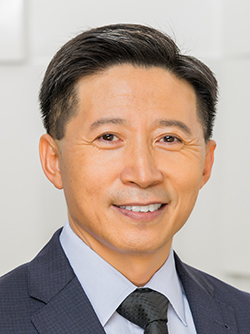
Shaun Wang, Ph.D. (Waterloo), FCAS, CERA
Director of the Insurance Risk and Finance Research Centre Nanyang Technological University, Singapore
Knowledge Set of Attack Surface and Cybersecurity Rating for Firms in a Supply Chain
Résumé (abstract)
Professor Wang will present economic models of cybersecurity investments by a firm, first considering the cost-benefit to the firm itself, and then to the eco-system of a supply-chain. He introduces a concept of a firm’s security knowledge set of its attack surface, relative to the universe of threats. He then proposes three classes of security production functions as the frontier curve of a firm’s knowledge set. Professor Wang distinguishes two types of security investments in acquiring data, information and expertise, vis-à-vis deploying defense measures and detection tools, and derives formula for optimal allocations. He also analyzes cyber breach propagations between firms in a supply-chain, and demonstrates that large firms requiring contractors to show security ratings by third parties can be an effective way of reducing information gap in a supply chain. Finally, he presents a model for the reliability (sharpness) of cybersecurity rating for firms, and shows how the perceived reliability of cybersecurity rating affects the incentives for firms to increase their security investments.
Professor Shaun Wang is Director of the Insurance Risk and Finance Research Centre, Nanyang Technological University in Singapore. He is currently leading the Cyber Risk Management Project (CyRiM), which is a university-government-industry partnership with the Monetary Authority of Singapore, Cyber Security Agency of Singapore, and several global insurance companies.
Professor Wang has rich academic and industry experience. From 2013-2015 he held the position of Deputy Secretary General & Head of Research of The Geneva Association – the leading global insurance think tank whose membership comprises 80 CEOs of the world’s top insurance and reinsurance companies. He was Thomas P. Bowles Chair Professor at Georgia State University (2004-2013), Research Director at SCOR (1997-2004), and Assistant professor at the University of Waterloo (1994-1997) and Concordia University (1993-1994).
Professor Wang has published numerous papers in top actuarial and insurance journals and received several international awards. He is the inventor of the « Wang Transform », a widelycited formula for pricing risks. He served as Editor of the ASTIN Bulletin. He led several international symposiums on risk and capital. He delivered a Capitol Hill briefing in Washington D.C. on “The Financial Crisis and Lessons for Insurers” in 2009. He earned his Ph.D. from University of Waterloo, M.Math from University of Saskatchewan, B.Sc. & M.Sc. from Peking University. He is Fellow of the Casualty Actuarial Society, Chartered Enterprise Risk Analyst, and Member of the American Risk and Insurance Association.
Partenaires
En partenariat avec le Département de finance, assurance et immobilier et le Département d’opérations et systèmes de décision de FSA ULaval, la Chaire RBC en innovations financières, la Chaire d’assurance et de services financiers L’Industrielle-Alliance, la Chaire Groupe Investors en planification financière, la Chaire d’actuariat, l’École d’actuariat, les salles des marchés Carmand-Normand et Jean-Turmel, le LABIFUL ainsi que l’Institut Technologies de l’information et Sociétés – Université Laval.