Program
November 24
November 24
9:30 a.m. - 9:40 a.m.
Welcome Frank Pons Room CGI Synergie (3522)
Presided by Jacqueline Corbett, Director, Centre for Research and Co-Creation in Innovation and Sustainable Indigenous Business, FSA ULaval
9:40 a.m. - 10:45 a.m.
10:45 a.m. - 11:00 a.m.
Refreshment Break Room CGI Synergie (3522)
11:00 a.m. - 12:00 p.m.
12:00 p.m. - 12:15 p.m.
Introduction to Microprogram on Management in the Indigenous Context Margaret Schomaker Room CGI Synergie (3522)
12:15 p.m. - 1:15 p.m.
Networking Lunch and Student Poster Presentations Room CGI Synergie (3522)
1:15 p.m. - 2:30 p.m.
2:30 p.m. - 2:45 p.m.
Refreshment Break Room CGI Synergie (3522)
2:45 p.m. - 3:45 p.m.
Intervenantes et intervenants
Speakers
Animation
Close window Reflections of a Serial Indigenous Entrepreneur: Building an Online Smoking Cessation Application
During this presentation, Ms. Harrison will tell the story of how she developed the Quit My WayTM mobile application from the ground up based on her own efforts to break her addiction to cigarettes. She will talk about the psychology behind the application, how she funded the business, her experiences with digital innovation, and the impact of her lived experiences and Indigenous knowledges on the innovation process and product.
Close window
Close window Digital Innovation in Indigenous Nations: Co-creating the Abenaki Fishing Logbook Mobile Application
In a rapidly evolving digital age, technology has become a powerful tool for preserving and promoting Indigenous cultures and empowering Indigenous Peoples. We present an ongoing project to digitize a fishing logbook in the form of a mobile application at the request of the w8banaki (Abenaki) Nation in Quebec. Through this collaborative project, we hope to understand how IT artifacts for sustainable development can be designed and developed to take into account the knowledge, values and worldviews of Indigenous Peoples. We will share our unique app development methodology, some initial lessons learned, and a prototype that audience members can try on their own phones.
Close window
Close window There is Nothing as Colonial as a Business School: Reconciling Business Education by Addressing the Colonial Conundrum
Colonial systems of domination have proven to be quite effective and lasting. This colonial legacy can be seen in the business school, a paragon of Western, formal systems of education and one of the most important institutions of the Western world. However, management scholars have yet to address the nefarious consequences of colonialism and the impact colonial systems of domination have had on the First Peoples around the globe. It is for this reason that we, as academics, teachers and researchers must take a critical view of our discipline to outline a path to authentic (re)conciliation . We contend that the business school faces a distinctive colonial conundrum , which is reflected in current policies of Indigenous inclusion or, worse yet, superficial strategies of cosmetic indigenization. The preservation of the status quo through ongoing policies of assimilation cannot continue! Toward that end, we call for management scholars and educators to build towards authentic (re)conciliation characterized by less hypocrisy and hegemonic thinking and more authentic dialogue with First Peoples with the goal of systemic and structural change that will reform the colonial legacy of the business school.
Close window
Close window Researching the Living Past: Discovering Past Occurrences Through Conversational Inquiry
To know the past of Indigenous nations one must know their present. One needs to engage with the peoples, with their communities, and with their lands. Indigenous peoples are alive and healthy, in spite of efforts otherwise. They know who they are and have known it for thousands of years, much before the arrival of settlers. Indigenous peoples know of themselves and their world through stories. As researchers, we need to take time to listen to these stories so that we can better understand the past in the present. We propose a conversational inquiry approach to the study of the past in Indigenous communities. We follow the advice we received from a Cree Elder and use the term past occurrences to refer to “the collection of individual memories about the past that exist in stories held by members of a community and passed on over time, linking the past, present and future”. We define conversational inquiry as a form of research that takes place through a dialogical interaction between a researcher seeking knowledge and several individuals recognized as knowledge keepers. The final product of this inquiry is a story, a narrative of peoples, things, and events that satisfies both the knowledge keepers’ need for expression and the knowledge seeker’s quest for knowledge. This co-construction is critical for moving away from cognitive imperialism and epistemic ignorance, while reinforcing a shared approach to data collection and interpretation.
Close window
Close window Frank Pons
Dean,
See profile
Close window
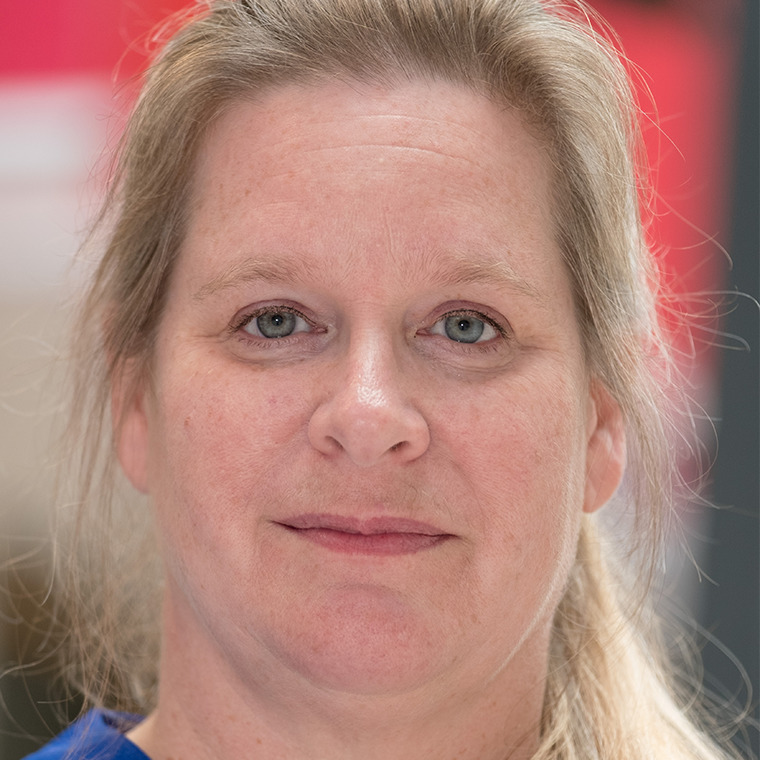
Close window Hazel Harrison
Founder and CEO,
Ms. Hazel Harrison is Inuvialuit, hailing from the Beaufort Delta region of the Northwest Territories, Canada and is the CEO and Founder of Smart Addiction Technologies Inc. – the company behind Quit My WayTM . Quit My WayTM helps people in their efforts to stop smoking and vaping. Ms. Harrison is a certified business advisor, lending her expertise to organizations like Wilfrid Laurier University’s Women Entrepreneurship Center (WEC), Women of Ontario Social Enterprise Network (WOSEN), Centre for Social Innovation (CSI), Alberta Women Entrepreneurs (AWE), and Invest Ottawa. She holds a BA in psychology from Carleton University and studied business at McMaster University. Her commitment to entrepreneurship and innovation led her to complete the Technology Entrepreneurship, Lab to Market program with HarvardX.
Close window
Close window Alexander Chung
Assistant Professor,
Dr. Alexander Chung is an Assistant Professor in the Management Information Systems department at Université Laval’s Faculty of Business Administration. He holds a Ph.D. in Management from the University of Ottawa. His research uses the design science research paradigm and focuses on the design of information systems for a more humane future. He has explored various fields of application like health and environmental sustainability and has published in the International Journal of Information Management and recognized information systems conferences like the European Conference on Information Systems and the Hawaii International Conference on System Sciences. Dr. Chung is a co-founder of the Centre for Research and Co-creation in Innovation and Sustainable Indigenous Business at Université Laval. Prior to his academic career, he worked at the Department of National Defence in the Assistant Deputy Minister (Data, Innovation and Analytics)’s office. In addition, Dr. Chung is interested in fisheries management, and has participated in several projects with government and private industry on Canadian fisheries and coastal zone management.
Close window
Close window Margaret Schomaker
Vice Dean of Academics, Student Affairs and International Accreditations,
See profile
Close window
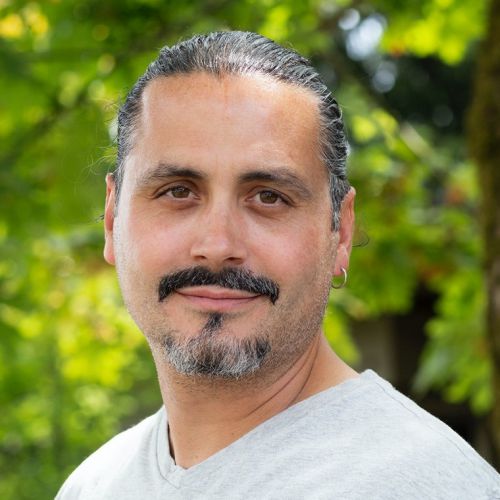
Close window François Bastien
Assistant Professor,
Dr. François Bastien ’s story begins in Wendake. As a Huron-Wendat, he has worked with various Indigenous organizations such as the First Nations Educational Council (FNEC) in Wendake, Kiuna College in the Abénaki community of Odanak and Maskwacis Cultural College within the Four Nations of Maskwacis. While working with these communities, he observed various incongruities between Indigenous ways of organizing and contemporary colonial models. He holds a PhD from HEC Montreal. Following positions at Concordia University and the University of Alberta, Dr. Bastien is now an Assistant Professor at the University of Victoria and Academic Director for the MBA Program Advancing Reconciliation. His research work focusses on Indigenous knowledges, Indigenous management, Indigenous organizing and indigenization. He currently sits on the editorial review board for the Academy of Management Learning & Education.
Close window
Close window Jacqueline Corbett
Director, Centre for Research and Co-Creation in Innovation and Sustainable Indigenous Business,
Dr. Jacqueline Corbett is Professor of Management Information Systems in the Faculty of Business Administration at Université Laval in Quebec City, Canada. She holds a Ph.D. from Queen’s University at Kingston, Canada. Her research takes a multidisciplinary and multi-method approach to investigate questions related to digital technologies in the areas of clean energy, sustainable development, and Indigenous business. Her research is funded in Canada by both the Natural Sciences and Engineering Research Council (NSERC) and the Social Sciences and Humanities Research Council (SSHRC), and has been published in top information systems and management journals. Dr. Corbett currently holds leadership roles as President of the Association for Information System’s special interest group in Green IS and Director of the Centre for Research and Cocreation in Innovation and Sustainable Indigenous Business at Université Laval.
Close window
Close window Josianne Marsan
Vice Dean of Research and Innovation,
See profile
Close window
Close window Christian Keen
Assistant Professor,
See profile
Close window
Close window The FSA ULaval Experience
Student space (in French only)
Consult your personalized student space: your individual gateway to your academic programs, courses, exam schedules and all the resources available at FSA ULaval.
Platform for alumni
Join the vast network of FSA ULaval alumni around the world! Get back in touch with former classmates, enjoy the benefits of mentoring and gain access to exclusive activities and training sessions.
Staff Intranet (in French only)
FSA ULaval Zone
Stay on top of the latest news about the organization and internal activities.
Close window